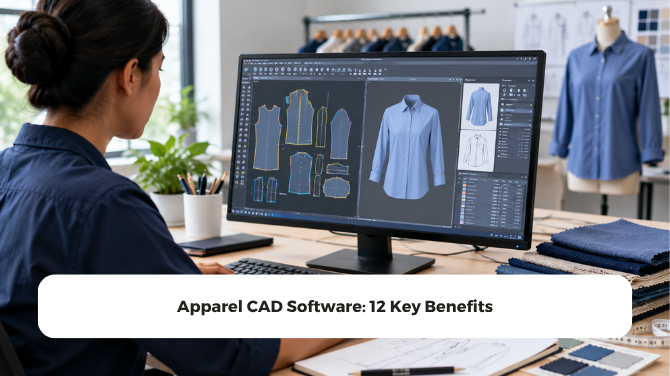
Apparel CAD software has become an important part of digital pattern making and product development. It can help apparel teams handle patterns, grading, fitting, marker making, and fabric consumption more efficiently.
For apparel manufacturers, having CAD in-house can also make it easier to store digital patterns, make corrections, and reduce the time involved in sample development. The article below explains the key benefits of using CAD in an apparel production environment.
Check out our Digital Swatch here.
Computer-Aided Design in Apparel
Computer-aided design (CAD) is an essential tool for digital pattern making and product development in the apparel and sewn product industry. The CAD system can be further linked to the automatic cutting software (CAM). But yes, a CAD system can be used independently without installing an automatic cutting system.
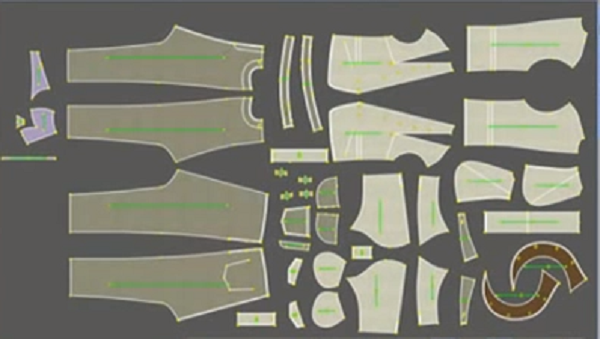
The main objective of the CAD system is making digital patterns, 3D simulation of the garment sample, pattern grading, checking the garment fitting, and quick correction of patterns based on the fit comments.
12 Benefits of Having CAD Software In-House
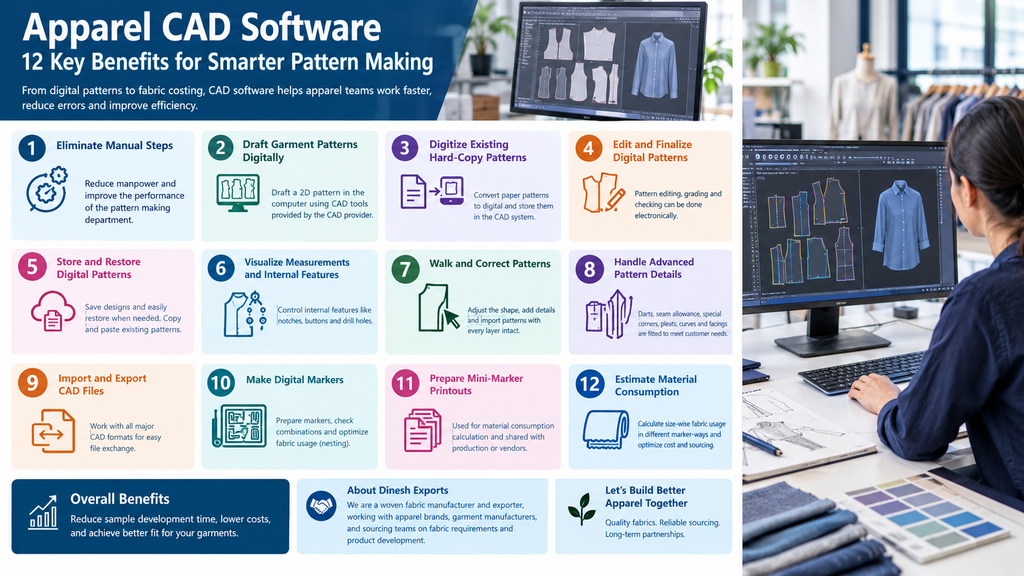
We have listed some of the benefits of having the CAD system in-house in the apparel industry. These benefits are illustrated by well-known CAD solution providers. By installing CAD software, you can benefit in the following areas.
1. Eliminate Manual Steps
Eliminate manual steps in the design process. You can reduce manpower and improve the performance of the pattern-making department.
2. Draft Garment Patterns Digitally
Draft the garment pattern from scratch. Drafting a 2D pattern on a computer can be done by using CAD tools provided by the CAD provider.
3. Digitize Existing Hard-Copy Patterns
Digitize existing hard-copy patterns. You might have made paper patterns that are ready and approved by the buyer. You can digitize those hard-copy patterns in CAD and store them digitally.
4. Edit and Finalize Digital Patterns
Edit and finalize existing digital patterns easily. Pattern editing, pattern grading, and checking of the digital patterns can be done electronically.
5. Store and Restore Digital Patterns
Store and restore digital patterns easily. You can save your designs (patterns) developed in the CAD and easily restore them when you need. Copy and paste of the existing pattern can be done.
6. Visualize Measurements and Internal Features
Visualize measurements of different styles and gain control of internal features such as notches, buttons, and drill holes.
7. Walk and Correct Patterns
Walk a pattern while you correct the shape, add or adjust details, and import patterns with every layer intact.
8. Handle Advanced Pattern Details
Darts, seam allowance, special corners, advanced measurement techniques, pleats, curves, and facings are all fitted to trade, to meet the needs of customers across a wide range of product and style types.
9. Import and Export CAD Files
Importing and exporting pattern files to and from all major CAD formats is possible.
10. Make Digital Markers
Make digital markers. After pattern making, you can prepare the marker with hundreds of combinations and see on the computer screen which combination gives you the best utilization of fabric. It is called nesting. You can take a printout of the marker and use the marker in the fabric lay for cutting
11. Prepare Mini-Marker Printouts
Mini-marker printout. You can take a printout of the mini-marker, which is used for material consumption calculation. The same can be filed in the production file and given to vendors or CMT factories.
12. Estimate Material Consumption
Estimate material consumption. In the manual method, fabric consumption is calculated based on the patterns and a marker of the average-size garment. With the CAD system, you can calculate size-wise fabric consumption in various marker ways. This would help you optimize the fabric consumption and cost in fabric sourcing. You can even prepare a separate marker for different fabric widths.
Overall Benefits of CAD in Apparel
All these benefits altogether reduce the sample development time, reduce the cost of sample development, and provide a better fit for some kinds of garments.
The advantages of the CAD system are not limited to the above points. It has many other benefits as well. A novice can learn pattern making faster by using the CAD system.
About Dinesh Exports
At Dinesh Exports, we understand the importance of accuracy and efficiency throughout apparel and fabric development. As a woven fabric manufacturer and exporter, we work with apparel brands, garment manufacturers, sourcing teams, and other industry professionals on fabric requirements for different products.
Our experience in woven fabrics also means that factors such as fabric width, GSM, construction, and fabric consumption are important considerations during product development and sourcing.
Learn more about our company and capabilities at Dinesh Exports.
Here are 5 related article sections you can add to the article, with relevant anchor text and hyperlinks:
Related Articles
- Fabric GSM Explained
- How to Calculate Fabric Consumption of a Garment
- Cotton Woven Fabric: Benefits and Types
- Types of Woven Fabric Explained
- Woven Fabric: Everything You Need to Know
Conclusion
CAD software has changed the way apparel teams approach digital pattern making and product development. From creating and editing patterns to grading, marker making, and estimating material consumption, the system can support several stages of the development process.
For apparel businesses handling multiple styles, sizes, and fabric requirements, bringing these activities into a digital workflow can help reduce manual work and make pattern-related tasks easier to manage.